
A Communicator's Guide to Software Harm Prevention
Comms professionals need to be in the room before products ship — evaluating algorithmic bias, AI misuse potential, and data practices before they become headlines.

Building on our privacy outrage prevention framework to address the full landscape of software harms
Communications professionals have long focused on crisis management – responding to problems after they occur. But as software becomes increasingly central to how organizations serve customers and communities, our role must evolve from reactive damage control to proactive harm prevention.
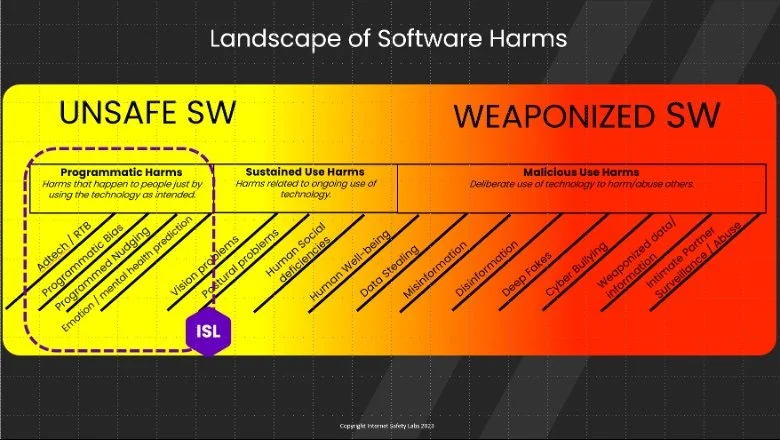
The Internet Safety Lab's "Landscape of Software Harms" framework (shown below) highlights why this shift is so important. Software-related risks extend far beyond traditional concerns into areas where communication professionals' skills in stakeholder perception, narrative framing, and risk assessment can prevent real harm before it reaches the market.
From Privacy Outrage to Software Harm Prevention
In our previous post on preventing privacy outrage, I outlined how communications professionals can use proactive questioning to prevent privacy-related incidents. That framework focused primarily on what the Internet Safety Lab categorizes as "Programmatic Harms" – unintended consequences that occur through normal use of technology.
But the ISL framework reveals two additional categories where communications expertise becomes crucial:
- Sustained Use Harms occur when prolonged engagement with technology creates negative outcomes, such as social media addiction, algorithmic bias reinforcement, or data-driven discrimination. These harms often involve complex stakeholder narratives about corporate responsibility and user agency.
- Malicious Use Harms represent the weaponization of technology — from deepfakes to cyberbullying to disinformation campaigns. Here, communications professionals must help organizations think through not just how their technology might be misused, but how they'll explain their mitigation efforts to stakeholders.
The Comms Professional's Role in Harm Prevention
Our core competencies as communication experts — understanding audience perception, crafting compelling narratives, and managing stakeholder relationships — are precisely what's needed to address software harms proactively.
Stakeholder Impact Assessment
While engineers focus on technical functionality and lawyers focus on compliance, communications professionals naturally think about how different stakeholder groups will perceive and be affected by technology decisions. This perspective is essential for identifying potential harms before they manifest.
Narrative Vulnerability Analysis
We excel at understanding how stories spread and evolve across different audiences. This skill helps predict which aspects of a technology might become focal points for criticism, regulation, or misuse.
Risk Communication and Education
When harms can't be eliminated, communications professionals can help organizations explain trade-offs transparently and educate users about risks and mitigation strategies.
An Expanded Framework for Software Harm Prevention
Building on the privacy outrage prevention checklist, here are key questions communications professionals should ask during product development:
Understanding the Technology
- What specific problems does this technology solve, and for whom?
- What are the potential unintended consequences of normal use? (Programmatic Harms)
- How might prolonged or repeated use affect users over time? (Sustained Use Harms)
- How could bad actors weaponize this technology? (Malicious Use Harms)
Stakeholder Impact Analysis
- Which stakeholder groups will be most affected by this technology?
- How will different communities experience the benefits and risks differently?
- What power dynamics does this technology create or reinforce?
- Who has agency over how this technology affects them, and who doesn't?
Narrative Risk Assessment
- What stories might critics, journalists, or activists tell about this technology?
- How will we explain our design choices to skeptical audiences?
- What analogies or comparisons will people make to understand this technology?
- If this technology causes harm, how will we explain what went wrong and what we're doing about it?
Mitigation and Transparency
- What safeguards have we built in to prevent or minimize potential harms?
- How will users understand and control their exposure to risks?
- What research or expertise informed our harm assessment?
- How will we monitor for emerging harms and adjust our approach accordingly?
Organizational Readiness
- Do we have processes for responding quickly when harms are identified?
- Have we prepared our customer service, legal, and executive teams for difficult questions?
- What public commitments have we made that this technology must honor?
- How does this technology align with our stated values and mission?
The Business Case for Proactive Harm Prevention
Organizations often resist investing in harm prevention because the benefits are invisible — problems that don't happen, crises that don't occur, trust that doesn't erode. Communications professionals can help make this case by:
- Quantifying reputation risk: Calculate the potential cost of regulatory attention, media scrutiny, user exodus, and talent retention challenges that result from software harms. Think about how many engineering hours are spent responding to these issues — that’s time not spent on priority projects.
- Highlighting competitive advantage: Organizations that proactively address software harms can differentiate themselves and build stronger stakeholder relationships.
- Connecting to business metrics: Show how harm prevention supports customer retention, employee satisfaction, regulatory compliance, and long-term sustainability — and again, consider where the business wants employee time spent compared to where their focus will be pulled if something goes wrong. Nobody wants their expensive engineers spending weeks in interviews with legal teams responding to an FTC complaint.
The Path Forward
The landscape of software harms will only become more complex as AI, quantum computing, and other emerging technologies evolve. Communications professionals who develop expertise in proactive harm prevention will become invaluable partners in building technology that truly serves society.
We already know how to spot narrative vulnerabilities, understand stakeholder concerns, and communicate complex trade-offs. Now we need to apply these skills earlier in the development process, before harms reach the market.
Organizations that embrace this approach build stronger, more sustainable relationships with the communities they serve. And in an era where trust in technology companies continues to decline, that may be the most valuable competitive advantage of all.
The Internet Safety Lab's "Landscape of Software Harms" framework provides a crucial foundation for understanding how technology can impact society. Learn more about their work at Internet Safety Labs.